GENE-HudsonRock
One gene. One tool. Three analyst-grade prompts. No API key. No setup friction. Just install and start querying.
GENE-HudsonRock - Infostealer OSINT and AI-Powered Threat Intelligence
Every day, thousands of machines are silently compromised by Infostealer malware. Credentials, session cookies, autofill data — all harvested and sold. Hudson Rock collects and indexes this data. GENE-HudsonRock puts it directly into your AI workflow.
One gene. One tool. Three analyst-grade prompts. No API key. No setup friction. Just install and start querying.
The Tool: Hudson Rock Infostealer OSINT
The core tool gives you five investigative angles in a single interface. Pick the option that matches your target, provide the value, and get structured threat data back instantly.
| Option | What It Answers |
|---|---|
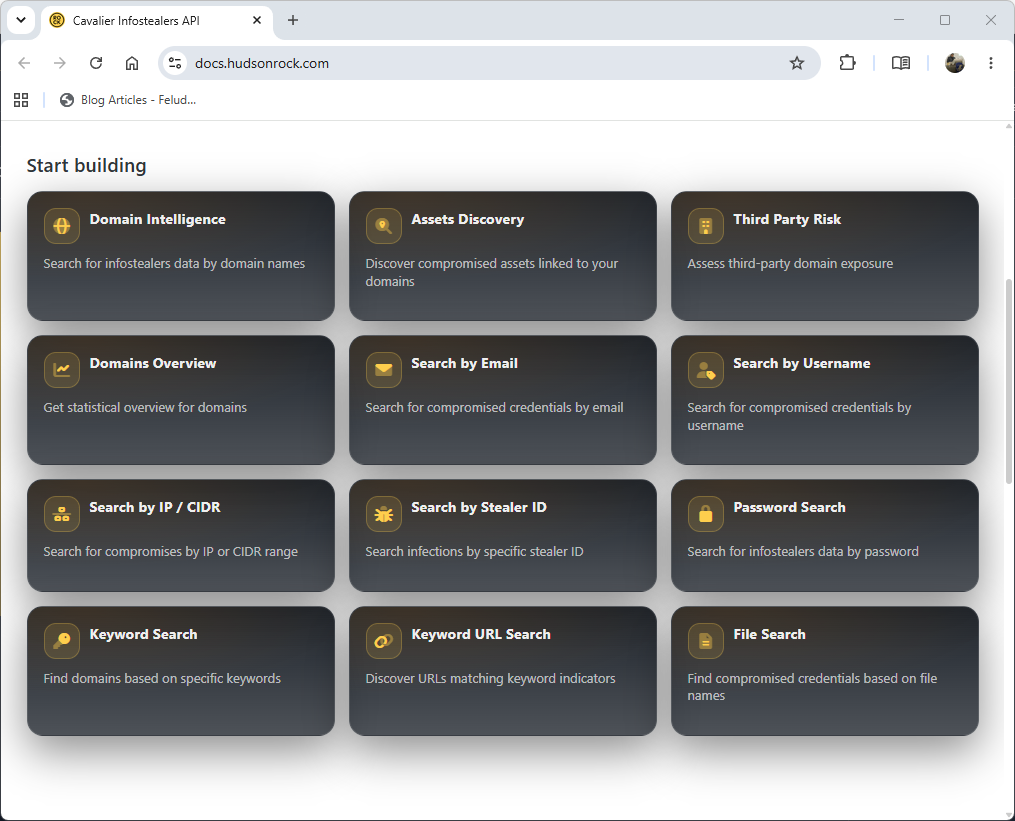
| search-by-email | Is this email address linked to an Infostealer-compromised machine? |
| search-by-username | Does this username appear in any Infostealer infection records? |
| search-by-domain | How many employees and users of this domain have been infected? Which systems were targeted? |
| urls-by-domain | What is the external attack surface of this domain based on what Infostealer malware actually targeted? |
| search-by-ip | Is this IP address associated with an Infostealer infection? |
The tool is self-describing. Your AI assistant can query its structure at any time to understand exactly what parameters it accepts and what each option returns. No documentation tab-switching required.
Three Prompts That Turn Data Into Intelligence
Raw API data is only half the story. The prompts in this gene activate a Senior Cybersecurity Analyst persona — specialized in Infostealer threats — that knows exactly how to interpret the results and what to do with them.
Infostealer Quick Scan
Give it any target. Email, username, domain, IP — it figures out the right lookup automatically. Within seconds you get a four-part assessment: exposure status, key risk indicators, threat context, and one concrete next step. Built for analysts who need answers fast, not reports that take an hour to read.
Domain Infostealer Exposure Report
This prompt runs two lookups back to back — infection impact and attack surface — then combines them into a structured report. Employee exposure, user exposure, top targeted URLs, third-party risk, a risk rating, and prioritized remediation steps. Choose between a brief executive summary or a full technical breakdown. Hand it to your CISO as-is.
Identity Infostealer Threat Check
Focused entirely on a single person. Provide an email or username and this prompt builds a personal compromise assessment: what was stolen, which systems were affected, when it happened, and what the individual or their security team should do right now. Works for HR investigations, VIP protection, and account takeover triage.
No API Key. No Configuration. Ready Immediately.
The Hudson Rock Cavalier community edition is fully open. GENE-HudsonRock ships with zero required credentials. Install the gene, and every tool and prompt is live. The data source is:
https://cavalier.hudsonrock.com/api/json/v2/osint-tools
Rate limit is 50 requests per 10 seconds — more than enough for interactive use and moderate automation.
Built for Feluda Flows — Serious Automation Power
Where this gene really scales is inside Feluda Flows. The tool and prompts are composable building blocks. Wire them together with other genes and decision logic to create fully automated threat intelligence pipelines.
A few real-world flow patterns:
- New phishing domain reported? Automatically run a domain exposure scan and attach the employee infection count to the incident ticket.
- New employee onboarding? Check their work email against Infostealer records before granting access to sensitive systems.
- Suspicious login alert fires? Enrich it with an IP lookup and an identity check in the same flow, then route to the right SOC queue based on the risk rating.
- Weekly threat briefing? Schedule a domain exposure report for your primary domain every Monday morning, formatted and ready to send.
- Penetration test kickoff? Run an attack surface mapping on the target domain as the first automated step, and pipe the top URLs directly into your scope definition.
Each prompt delivers analysis that a human analyst would spend time on manually. In a flow, it happens in the background — every time, at scale, without the bottleneck.
Who Gets the Most Out of This Gene
| Role | Primary Use | Best Starting Prompt |
|---|---|---|
| SOC Analyst | Enrich alerts with Infostealer context during active triage | Infostealer Quick Scan |
| Threat Intelligence Analyst | Profile targets and track domain-level exposure trends | Domain Infostealer Exposure Report |
| Incident Responder | Rapidly assess whether a compromised identity or IP has Infostealer history | Identity Infostealer Threat Check |
| Penetration Tester | Map attack surface and identify credential exposure before an engagement | Domain Infostealer Exposure Report |
| Security Engineer | Automate identity checks and domain monitoring in security pipelines | Infostealer Quick Scan in a Feluda Flow |
| CISO / Security Manager | Receive structured domain risk reports without manual analyst time | Domain Infostealer Exposure Report (brief format) |
What You Get
- 1 tool — Hudson Rock Infostealer OSINT with 5 lookup options
- 3 analyst prompts — Quick Scan, Domain Exposure Report, Identity Threat Check
- No API key required — community edition, open access
- Flow-ready — all components work inside Feluda Flows
- Version: 1.0.0
- Author: Reza Rafati
Activate GENE-HUDSONROCK
Current credits: 0